

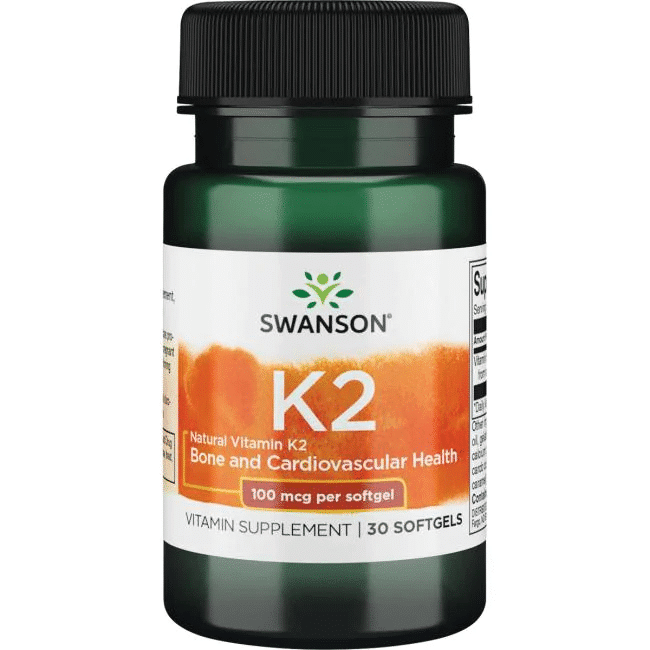
Vitamin K2
There is one vitamin that really deserves a lot more attention than it currently receives, and that is vitamin K2 (menaquinone). But most people don't even know it exists, or that it reduces the risk of cardiovascular disease and has a positive effect on bone formation. In fact, there are thousands of different forms of vitamin K, but the ones we associate with the term are K1 (phylloquinone) and K2 (menaquinone). For some strange reason, the form of K1, found in almost all leafy green vegetables, gets all the attention in the media. While no one seems to be talking about K2, which can be found in foods like cheese, egg yolks, butter, fermented foods, and liver. Our diets contain about 10 times more K1 than K2. A common misconception is that we don’t need K2 because the human body converts K1 to K2. Although this is seen in animals, the human body doesn’t seem to do this as efficiently. In fact, recent research suggests that we need to consume the true form of K2 to get the benefits. What are the benefits you ask? Well, aside from the fact that K2 is amazing for our cardiovascular health and bone density, especially when taken in conjunction with vitamin D, there are a number of other great effects associated with vitamin K2 supplementation. The importance of vitamin K2 is something completely new, even to most scientists. This is because it was long believed that the K1 form was all we needed and that both vitamins (K1 and K2) would have similar effects. However, several recent studies have proven that this is not true. For example: Vitamin K2 supplements reduced the risk of prostate cancer by 30%, while vitamin K1 had no effect. And then a study where vitamin K2 significantly reduced the risk of cardiovascular disease by removing calcium deposits from the arteries, but vitamin K1 again had no effect. The forms of vitamin K2 that we are most deficient in are MK-7 and MK-4.- MK-7 is produced in our gastrointestinal system and can be obtained from fermented foods. MK-7 is also considered very effective in terms of supplementation, as it lasts in the bloodstream for about three days.
- MK-4 is synthesized throughout the body by enzymes (it is particularly abundant in the brain and reproductive organs). We can get it in our diet through grass-fed meat (grain-fed animals do not have it). You can also supplement with MK-4, but it only lasts in the bloodstream for about 8 hours, so supplements are considered less beneficial than MK-7.


